
Vacuum Homogenizer Emulsifier Mixer: Four Core Functions in Sauce and Cosmetic Production
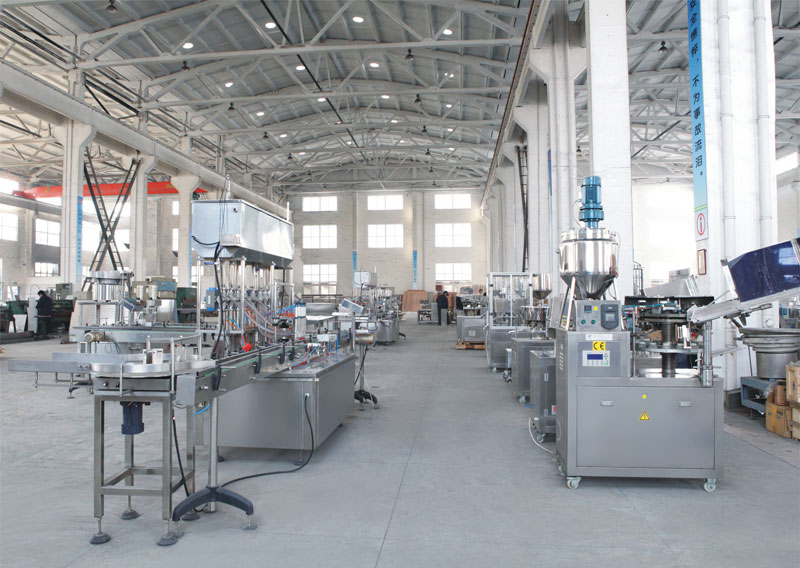
Vacuum Homogenizer Emulsifier Mixer: Four Core Functions in Sauce and Cosmetic Production
A vacuum homogenizer emulsifier mixer is a closed-vessel processing system that performs four functions in one machine: emulsifying, homogenizing, mixing and dispersing. It operates under vacuum, normally with a heating and cooling jacket, and it is used in mayonnaise, food sauce, cosmetic cream and daily chemical production, where an open agitator cannot deliver a stable, repeatable emulsion.
This article explains each of the four core functions in practical terms, then examines why vacuum level, a working temperature range up to 110°C and ambient-temperature processing change what the finished product looks and behaves like. It also covers the execution details that matter after shortlisting: compliance requirements, production capacity, acceptance testing, purchasing terms and what long-term equipment support actually depends on.
Problem Definition: What Fails When Emulsification Is Not Controlled
Most quality problems in sauces and creams trace back to three root causes: the emulsion separates, droplet size is uneven, or air is trapped inside the product.
A conventional open emulsifier can blend an oil phase and a water phase, but its shearing force is limited and it works in constant contact with air. Particle size produced by conventional emulsification typically falls in the 5–20 μm range. A vacuum homogenizer emulsifier mixer typically produces 1–5 μm with a narrower particle size distribution. That difference shows up directly in texture, mouthfeel and stability during storage.
Air is the second problem. An open tank folds air into the batch during agitation. In mayonnaise, entrained air changes density and shortens shelf life; in cosmetic creams, it creates visible bubbles and inconsistent fill weights. Vacuum extraction removes that air instead of dispersing it into the product.
The third problem is repeatability. If shear intensity, vacuum level and temperature drift from batch to batch, the same recipe produces different results. Rejected batches, refills and rework are the operational cost of that variability — which is why buyers at the evaluation stage look past the tank itself and examine the control system and the process sequence.
Industry Background: Why Demand for Vacuum Emulsification Keeps Growing
Several independently published figures describe the market this equipment serves.
- The global homogenizers market was valued at USD 2.10 billion in 2024 and is projected to reach USD 3.79 billion by 2035, at a CAGR of 5.4% (Roots Analysis).
- The vacuum mixer homogenizer market is estimated at USD 1.02 billion in 2026, with the cosmetics and personal care segment leading at a 38% market share (Future Market Insights).
- The global mayonnaise market was worth approximately USD 12.58 billion in 2024, supporting demand for high-shear vacuum emulsification equipment (Zion Market Research).
- Asia-Pacific holds a 36.2% revenue share of the homogenizing mixer market as of 2025, led by China's manufacturing ecosystem (Dataintelo).
- The global emulsifier market — the ingredient class these machines are built to disperse and stabilize — is expected to reach USD 12.13 billion by 2030 at a CAGR of 4% (Mordor Intelligence).
The practical implication for buyers is that demand is not tied to one end market. A platform that serves mayonnaise and cosmetic cream equally can be specified, documented and supported across a wider range of production environments, which matters when equipment is expected to stay in service for many years rather than one product cycle.
The Four Core Functions Explained
Emulsifying, homogenizing, mixing and dispersing are often used interchangeably in supplier literature. They are not the same operation, and each one solves a different physical problem inside the vessel.
1. Emulsifying: Bringing Oil and Water Into a Stable Dispersion
Emulsifying is the formation of a stable dispersion from two phases that do not naturally mix. The vacuum emulsifying mixer is designed for homogenizing and emulsification processes, and it performs this step under vacuum and controlled temperature so that the oil phase is fully melted and the aqueous phase fully dissolved before the two are combined. The result is an emulsion whose internal structure holds during storage instead of separating.
2. Homogenizing: Reducing and Narrowing Droplet Size
Homogenizing is what separates this category from a standard mixer. The high-shear homogenizing head applies intense mechanical shear, breaking large droplets into smaller ones and narrowing the particle size distribution. In side-by-side terms, conventional emulsification produces 5–20 μm particles, while vacuum homogenization produces 1–5 μm. A narrower distribution means consistent texture across the whole batch rather than a mix of coarse and fine regions.
3. Mixing: Bulk Blending, Heat Transfer and Powder Wetting
Mixing keeps the batch uniform in temperature and composition, not only in the zone where the shear head is working. Without bulk movement, the jacket surface overheats product near the wall while the centre of the vessel stays cooler. Mixing is also the step in which powders — stabilizers, thickeners, gums — are wetted into the liquid phase before high shear is applied.
4. Dispersing: Breaking Down Agglomerates
Dispersing applies to solids rather than droplets. Ingredients such as thickening agents and pigments tend to clump on contact with liquid, forming agglomerates that a slow agitator cannot break apart. High shear disperses those agglomerates into the continuous phase so the final product is uniform rather than grainy or streaked.

Why Vacuum Level, Temperature Range and Control Mode Matter
Vacuum at -0.09 MPa
YeKeey builds this equipment around a working vacuum level of -0.09 MPa. Working under vacuum does two things. It removes air and dissolved gas from the product, which reduces bubbles, limits oxidation and stabilizes density. It also allows the vessel to remain sealed during processing, keeping the batch enclosed from phase loading through discharge.
One process risk associated with vacuum operation is material entrainment into the vacuum system during extraction. YeKeey addresses this with a high-precision liquid level sensor for real-time monitoring.
High-Temperature Operation up to 110°C
The heating jacket supports working temperatures up to 110°C. This range covers the melting of solid oil phases and waxes, the dissolution of solids that only enter solution when warm, and formulations that require an elevated processing temperature before cooling. Heating and cooling in the same jacketed vessel lets one machine carry a batch from melt stage to finished emulsion without transferring product between tanks.
Ambient-Temperature Operation
Not every formula tolerates heat. Heat-sensitive actives, certain proteins and volatile aroma components require processing at ambient temperature. Because vacuum and high shear do the emulsifying work, the platform can process these formulations without relying on thermal energy to break down the emulsion.
Control Mode and Lifting Safety
Control is available in PLC mode or button mode. PLC control suits lines that require recipe storage and repeatable parameter sequences; button control suits simpler operations. The vessel lid and stirring assembly are raised and lowered by a hydraulic lifting system with a safety self-locking function, which addresses the risk of an uncontrolled drop of the lifting system through an anti-fall self-locking mechanism.
Supporting equipment around the vessel includes a ducting system for managing vapour and airflow during heating and filling. Where the production environment requires it, explosion-proof certification and pressure vessel specifications apply — these are scenario-specific requirements rather than standard features of every installation.
Construction Materials
YeKeey builds these machines in SS304 or SS316 stainless steel for product-contact construction. In GMP-regulated pharmaceutical and cosmetic production, standards typically require SUS316L stainless steel for contact parts, so material selection should be confirmed against the applicable standard rather than assumed. For food sauces and mayonnaise, the stainless grade also determines corrosion resistance against acidic and salt-containing formulas.
Step-by-Step: How One Production Batch Runs Through the Machine
The four functions do not happen simultaneously — they happen in a sequence, and the sequence is what a buyer is really specifying.
- Step 1 — Phase preparation. The oil phase and aqueous phase are weighed and loaded, with the jacket raising temperature up to 110°C where the formula requires melting or dissolution.
- Step 2 — Vacuum and degassing. The vessel is sealed and vacuum is drawn to the working level of -0.09 MPa, removing air and dissolved gas from the product.
- Step 3 — Emulsifying. The two phases combine under vacuum and controlled temperature, forming the initial emulsion.
- Step 4 — Homogenizing. The high-shear head runs for a defined cycle, reducing droplet size into the 1–5 μm range and narrowing the distribution.
- Step 5 — Mixing and cooling. The agitator keeps the batch uniform while the jacket cools it, or the batch is held at ambient temperature for heat-sensitive additions.
- Step 6 — Dispersing. Solid ingredients added during the run are broken down and distributed evenly through the continuous phase.
- Step 7 — Discharge. Product is discharged for filling once the target texture and temperature are reached.
- Step 8 — Verification. Vessel and lines are cleaned, and batch parameters are recorded for traceability.
For equipment procurement, the equivalent verification step is the Factory Acceptance Test (FAT), which is YeKeey's standard acceptance criterion before shipment.
Use Cases: Where This Equipment Category Is Applied
Typical application scenarios for the vacuum emulsifying mixer include cosmetics and food product manufacturing — specifically cosmetic cream production, food emulsion processing and mayonnaise production. In practice, those applications differ in three ways worth noting:
- Mayonnaise and emulsified sauces. High-shear homogenization sets the droplet size that determines texture, mouthfeel and resistance to oil separation during shelf life. Vacuum degassing keeps density consistent, which in turn keeps fill weights consistent.
- Food emulsion processing. Dressings, sauces and other emulsified foods use the same sequence, with the heating jacket supporting melt and dissolution stages before cooling.
- Cosmetic cream and skincare production. Cream and lotion formulations depend on a narrow particle size distribution for smoothness and absorption, and on ambient-temperature processing for heat-sensitive actives.
- Daily chemical products. The same platform serves a wider range of emulsified consumer products that require stable texture and repeatable batch output.
- Regulated production environments. Where GMP standards apply, SUS316L contact parts, explosion-proof certification and pressure vessel compliance become specifying criteria rather than options.
Comparison Table: Vacuum Homogenizer Emulsifier Mixer vs Conventional Emulsifier
| Comparison factor | Conventional emulsifier | Vacuum homogenizer emulsifier mixer |
|---|---|---|
| Particle size | 5–20 μm | 1–5 μm |
| Emulsification stability | Baseline stability | Superior emulsification stability |
| Particle size distribution | Wider distribution | Narrower distribution |
| Shearing force | Limited shear | Stronger shearing force |
| Degassing | Air remains in product | High vacuum degassing |
| Control | Basic operation | Intelligent control |
| Maintenance | More maintenance | Less maintenance required |
| Efficiency | Variable batch quality | Higher emulsification efficiency, consistent quality, fewer rejected batches, better material utilization |
| Best suited to | General blending and low-stability emulsions | High-standard cosmetics, food and pharmaceutical emulsification requiring long-term stability |
| Cost profile | Lower initial investment | Initial investment slightly higher, but total cost of ownership lower due to fewer rejections and stable production |
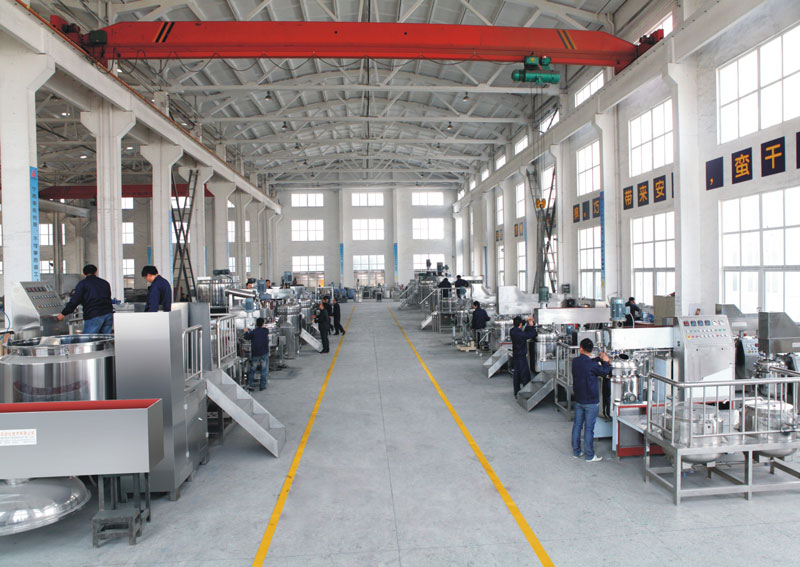
Decision-to-Execution Checklist: What to Confirm Before the Order
Compliance
- Explosion-proof certification may be required where the machine is installed in a classified area.
- Pressure vessel specifications and compliance apply where the vessel is designed and operated as a pressure vessel.
- YeKeey's MC series vacuum homogenizer emulsifier mixers hold CE certification issued by ECM under Certificate No. 0P210922.WYAQT12.
- GMP-oriented pharmaceutical and cosmetic projects typically require SUS316L stainless steel for product-contact parts.
Capacity and Delivery
- Monthly production capacity is 50 units.
- Annual output is 600 units, with 80 employees across a 20,000 m² facility.
- Export ratio is 35%, with equipment applied in more than 70 countries and regions through more than 4,000 enterprises and institutions.
Commercial Terms
- MOQ: 1 set
- Delivery terms: FOB / CIF / EXW / CFR
- Acceptance criteria: FAT
- Payment terms: 30/70
Long-Term Supply Considerations
Wuxi YK Automation Technology Co., Ltd (YeKeey) was established in 1998 and has manufactured fine chemical, pharmaceutical and high-end processing equipment since then, with an R&D team of 8 engineers and an annual investment of sales profit into research and development. As of 2023 the company held 55 patents and 3 software programs, implemented the ISO9001 quality system from 2003, and was certified as a high-tech enterprise in 2018. For a buyer planning production over several years, the relevant questions are whether specifications, documentation and process support stay consistent as volumes grow — which is the basis on which YeKeey states its long-term partnership approach and its stated markets across Europe, Central Asia, North Africa, Latin America and Southeast Asia. More detail is available at yekeey.com.
Frequently Asked Questions
1. What compliance requirements apply to a vacuum homogenizer emulsifier mixer?
Requirements depend on the process environment rather than the machine category alone. Where the mixer is installed in a classified area, explosion-proof certification is typically required. Where the vessel is designed and operated as a pressure vessel, pressure vessel specifications and compliance apply. For pharmaceutical and cosmetic production, GMP standards typically require SUS316L stainless steel for product-contact parts. YeKeey's MC series vacuum homogenizer emulsifier mixers hold CE certification issued by ECM under Certificate No. 0P210922.WYAQT12.
2. Can one machine handle both mayonnaise-type sauces and cosmetic creams?
Yes. The vacuum emulsifying mixer is designed for homogenizing and emulsification processes, and its typical application scenarios include cosmetic cream production, food emulsion processing and mayonnaise production. Both product families require the same four core functions — emulsifying, homogenizing, mixing and dispersing — performed under vacuum, although construction material, control mode and certification requirements may differ between a food sauce line and a cosmetic line.
3. What are the purchasing terms, and what drives the total investment?
YeKeey's standard purchasing terms are MOQ 1 set; delivery terms FOB, CIF, EXW or CFR; acceptance criteria FAT; and 30/70 payment terms. Investment level depends on vessel volume, materials of construction (SS304 or SS316), control mode (PLC or button), vacuum and heating configuration, and whether explosion-proof or pressure vessel certification is required. On cost of ownership, a vacuum homogenizer emulsifier mixer carries a slightly higher initial investment than a conventional emulsifier, but a lower total cost of ownership because of fewer rejected batches and more stable production.
4. How can a buyer validate performance before committing to full-scale production?
Validation usually proceeds in two stages. First, a Factory Acceptance Test is the standard acceptance criterion, so the machine can be inspected and verified against the agreed specification at the factory before shipment. Second, because the minimum order quantity is 1 set, a single unit can be installed and run on the actual recipe before additional capacity is ordered. YeKeey's product range also includes laboratory mixers, which support formulation and process development ahead of full-scale production.
5. What does delivery scheduling and long-term support depend on?
YeKeey's monthly production capacity is 50 units, and delivery terms include FOB, CIF, EXW and CFR, so scheduling is agreed per project against the confirmed specification. Over a multi-year horizon, the decision criteria that matter most are consistency of specification, documentation, process parameters and service continuity as production scales. To discuss specifications, request a quotation, or schedule a Factory Acceptance Test, contact YeKeey at sales@yekeey.com or +86-510-88530599.
Conclusion
A vacuum homogenizer emulsifier mixer earns its place on a production line because it performs four distinct jobs — emulsifying, homogenizing, mixing and dispersing — inside one sealed, temperature-controlled vessel. Vacuum at -0.09 MPa removes the air that open mixing folds into a batch. A working temperature range up to 110°C handles melting and dissolution, while ambient-temperature operation protects heat-sensitive formulas. SS304 and SS316 construction, together with PLC or button control, allow the same platform to serve mayonnaise, food sauces, cosmetic creams and daily chemical products.
For buyers at the decision and execution stage, the machine specification is only half of the evaluation. Compliance requirements such as explosion-proof certification, pressure vessel specifications and GMP-grade contact materials, along with capacity, FAT acceptance and clear purchasing terms, determine whether a line starts up on schedule and keeps running consistently afterwards. That combination of process capability and execution reliability is what turns a single equipment purchase into a long-term production relationship.
Plan Your Vacuum Homogenizer Emulsifier Mixer Project
Share your product type, batch volume and target texture with YeKeey. We will confirm the suitable configuration, materials, control mode and certification requirements, then arrange a Factory Acceptance Test schedule. MOQ is 1 set; delivery terms include FOB, CIF, EXW and CFR; payment terms are 30/70.
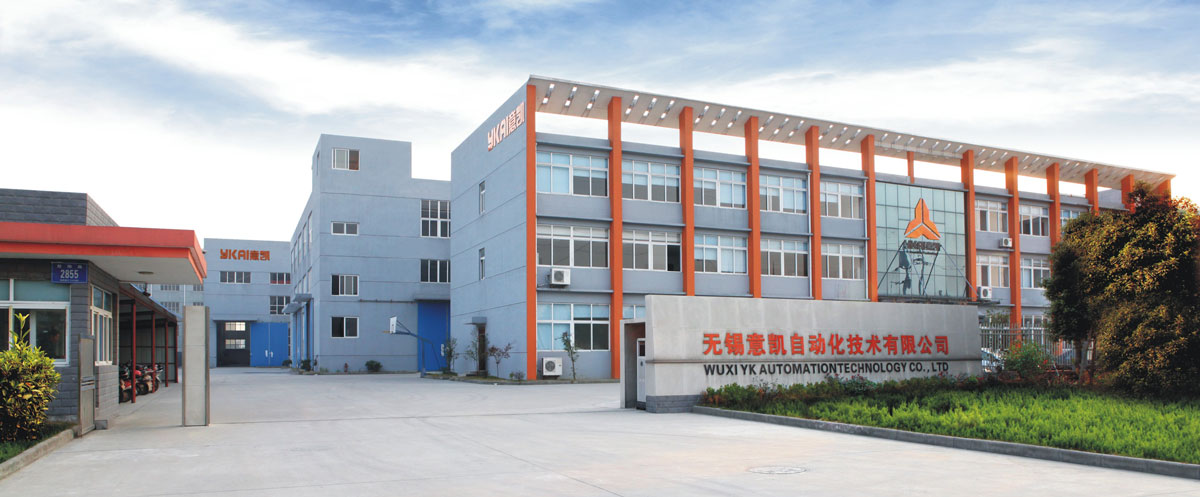
Contact: Xiong | Email: sales@yekeey.com | Tel: 86-510-88530599 | WhatsApp: +8615050678988 | Address: NO.2855 Jiaoyang Road, An Zhen, Wuxi, Jiangsu Province, China
Download the YeKeey Product BrochureHave Questions or Need More Details?
Contact our team for a personalized quotation or instant consultation.
Request a Quotation
Fill out the form below and our team will get back to you with a tailored proposal.
WhatsApp Direct Chat
Prefer to chat in real-time? Message us on WhatsApp for instant assistance & quick answers.
- Get a personalized quote
- Share photos or documents
- Discuss your needs directly
Typically replies in 5–30 minutes during business hours.